





The Future of Food Processing: Innovations in Braised Noodle Production Lines
Time:
08 Feb,2025
1. Introduction to Braised Noodle Production
Braised noodles are a staple in various culinary traditions, renowned for their rich flavors and chewy textures. The production of these noodles has evolved dramatically, especially within the food processing sector. As we look towards the future, it becomes essential to understand the innovations shaping the braised noodle production lines. This article provides insightful details about the cutting-edge technologies, automation processes, and sustainability practices that are enhancing efficiency and product quality in noodle manufacturing.
2. Historical Overview of Noodle Production
Noodles, dating back over 4,000 years, have a rich history that spans cultures and continents. They were first believed to have originated in China and have since become integral to many diets worldwide. The traditional methods of noodle production were labor-intensive, relying on manual skills and techniques passed down through generations.
With the rise of industrialization in the 19th century, noodle production began to shift towards mechanization. This transition allowed for larger-scale production and greater consistency in product quality. However, the past few decades have seen an explosion of innovation in food processing, particularly in the production of braised noodles.
3. Current Technologies in Food Processing
Today, the food processing industry is witnessing rapid technological advancements that enhance production capabilities. Some notable technologies currently shaping braised noodle production include:
3.1. Advanced Mixing Techniques
Mixing dough is one of the most critical steps in noodle production. Modern machines utilize advanced mixing techniques that improve dough consistency and texture, ensuring high-quality output. These machines employ precise measurements and controlled environments, taking the guesswork out of the mixing process.
3.2. High-Pressure Processing (HPP)
High-pressure processing is revolutionizing food safety and shelf life. This non-thermal pasteurization technique uses pressure instead of heat to eliminate pathogens while maintaining the quality and flavor of the noodles. HPP technology allows manufacturers to produce fresher products with an extended shelf life, meeting consumer demand for healthy options.
3.3. Continuous Cooking Systems
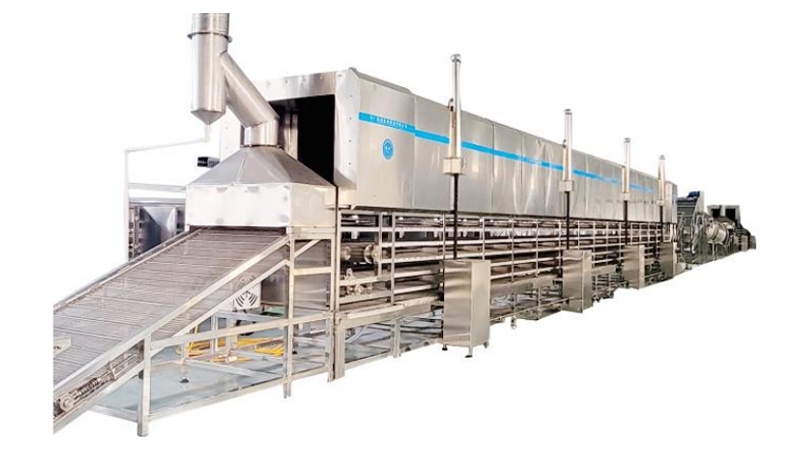
Continuous cooking systems streamline the production process by allowing noodles to pass through various cooking stages in a controlled environment. This method not only saves time but also ensures even cooking and optimal texture. These systems can be tailored to produce different types of braised noodles, enhancing versatility in manufacturing.
4. The Role of Automation in Noodle Production
Automation is a game-changer in the food processing industry, and its impact on braised noodle production cannot be overstated. Implementing automated systems reduces labor costs, minimizes human error, and enhances production speed.
4.1. Robotic Systems
Robots are increasingly being employed in noodle production lines to handle repetitive tasks, such as packaging and quality inspection. These systems can operate 24/7, significantly increasing output while maintaining consistent quality.
4.2. Smart Sensors and IoT Integration
The Internet of Things (IoT) is enabling real-time monitoring and control of production processes. Smart sensors can track temperature, humidity, and other critical variables, allowing manufacturers to adjust conditions instantly to optimize product quality. This level of control leads to reduced waste and improved efficiency in noodle production.
5. Sustainable Practices in Food Processing
Sustainability is increasingly becoming a priority in food processing, with manufacturers seeking to minimize their environmental impact. This trend is evident in the production of braised noodles, where innovations are making processes greener.
5.1. Energy-Efficient Equipment
Investing in energy-efficient machinery not only reduces operational costs but also lowers the carbon footprint of production. Modern equipment is designed to consume less energy while maintaining high output levels.
5.2. Waste Reduction Strategies
Food waste is a significant concern in the processing industry. Manufacturers are adopting waste reduction strategies, such as repurposing by-products and optimizing supply chains, to minimize waste. Advanced tracking systems allow for better inventory management, reducing excess production and spoilage.
6. Evolving Consumer Trends Affecting Noodle Production
Consumer preferences are rapidly evolving, directly influencing the food processing landscape. In the realm of braised noodle production, key trends include:
6.1. Health-Conscious Choices
Today’s consumers are more health-conscious than ever. There is a growing demand for noodles made from whole grains, organic ingredients, and gluten-free options. Manufacturers are responding by diversifying their product lines to cater to these preferences.
6.2. Convenience and Ready-to-Eat Options
With busy lifestyles, consumers are gravitating towards convenient meal options. Ready-to-eat braised noodles are becoming increasingly popular, prompting manufacturers to innovate packaging and preservation methods that enhance shelf life and flavor.
7. Future Innovations in Braised Noodle Production Lines
As we look ahead, the future of braised noodle production lines promises exciting innovations.
7.1. 3D Food Printing
3D food printing technology is on the verge of transforming noodle production. This innovative method allows for the precise design of noodles, enabling customization in shapes, sizes, and flavors. As this technology matures, it could redefine how consumers perceive and enjoy noodles.
7.2. Artificial Intelligence in Quality Control
Artificial intelligence (AI) is set to revolutionize quality control in noodle production. AI algorithms can analyze vast amounts of data to identify patterns and predict quality issues before they arise. This proactive approach ensures that only the highest quality products reach consumers.
7.3. Biotechnology for Enhanced Ingredients
The integration of biotechnology in food production is gaining momentum. This technology can enhance nutritional profiles and improve the sensory qualities of noodles. Future innovations may lead to noodles enriched with proteins, vitamins, and minerals, meeting the growing demand for functional foods.
8. Conclusion
The future of food processing, particularly in the production of braised noodles, is marked by significant innovations. Advanced technologies, automation, and sustainable practices are reshaping the industry, allowing for improved efficiency, product quality, and consumer satisfaction. As we continue to adapt to changing consumer preferences and environmental challenges, the braised noodle production lines will undoubtedly evolve, paving the way for a more sustainable and innovative future in food processing.
Related Links
Contact Information
Guojian Machinery Manufacturing Co., Ltd.
Factory Address:No.5288-8,Heshuo Blvd, Industrial Gathering Area ,Wuzhi Country Jiaozuo City, Henan Province
Copyright © 2024 Guojian Machinery Manufacturing Co., Ltd. Supports IPV6