




Unlocking Efficiency: The Essential Guide to Dough Leaf Production Lines
Time:
09 Feb,2025
In the food processing sector, particularly within the realm of noodle and dough products, the dough leaf production line plays a pivotal role. This sophisticated system is designed to streamline the production of dough sheets, which are crucial for a variety of food items such as dumplings, pastries, and noodles. Understanding the components and operations of a dough leaf production line can significantly enhance productivity and efficiency in your manufacturing process.
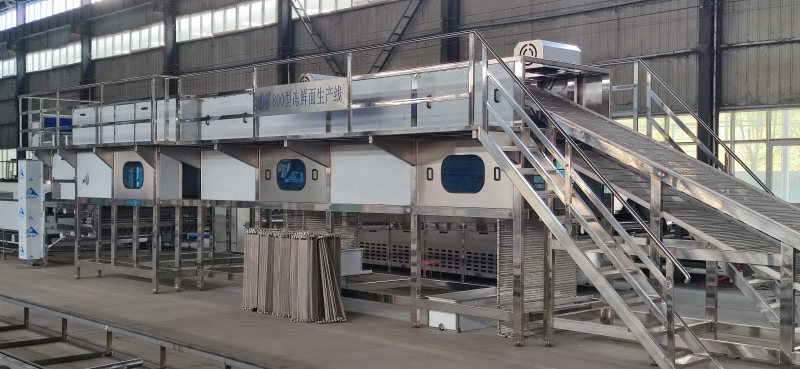
A typical dough leaf production line comprises several key components. These usually include a mixer for combining ingredients, a sheeter for rolling out the dough, a cutter for shaping, and a conveyor belt for transporting the finished sheets. Each component is integral to ensuring that the dough is processed consistently and efficiently, minimizing waste and maximizing output.
The mixing stage is critical, as it determines the quality of the dough. The right mixer ensures an even blend of flour and water, which is vital for achieving the desired texture and elasticity in the dough sheets. Once mixed, the dough is transferred to the sheeter, where it is rolled out to the required thickness. This process requires precision, as the thickness of the dough can affect cooking times and the overall quality of the end product.
After the dough has been sheeted, it moves to the cutting stage, where it is shaped into the desired forms. This can include rectangular sheets for lasagna or circular discs for dumplings. The accuracy of the cutting process is essential; any inconsistencies can lead to uneven cooking and poor-quality food products.
Transportation of the dough sheets is facilitated by an efficient conveyor system, which ensures that the sheets move seamlessly from one stage of production to the next. This minimizes manual handling, reduces labor costs, and enhances safety in the production environment.
Investing in a dough leaf production line allows manufacturers to increase their output while maintaining high-quality standards. Additionally, automation in these production lines can lead to better hygiene practices, as fewer manual interventions are required, reducing the risk of contamination.
Moreover, the scalability of a dough leaf production line is a significant advantage. As demand fluctuates, manufacturers can adjust their production rates without major overhauls to the system. This flexibility ensures that businesses can meet market demands promptly, whether during peak seasons or slower periods.
A dough leaf production line is an indispensable asset in the food processing industry. Understanding its functionality and components not only helps in optimizing production processes but also in delivering high-quality food products that meet consumer expectations. By investing in such technology, manufacturers can drive efficiency, reduce waste, and enhance the overall quality of their offerings.
Related Links
Contact Information
Guojian Machinery Manufacturing Co., Ltd.
Factory Address:No.5288-8,Heshuo Blvd, Industrial Gathering Area ,Wuzhi Country Jiaozuo City, Henan Province
Copyright © 2024 Guojian Machinery Manufacturing Co., Ltd. Supports IPV6